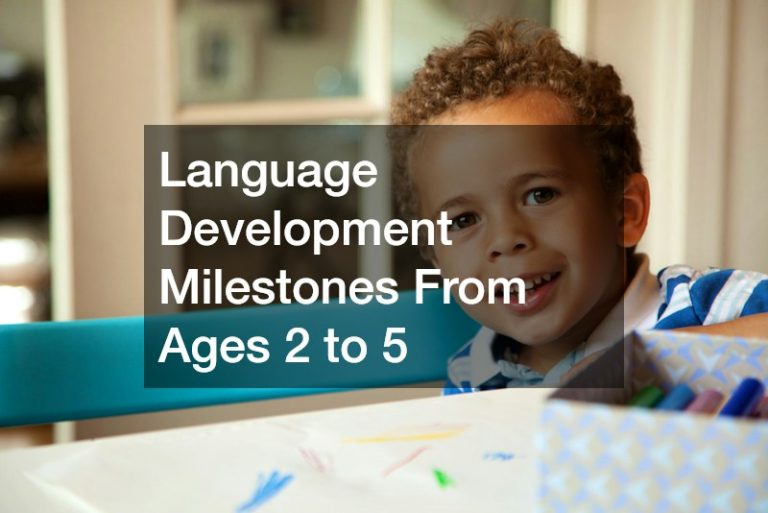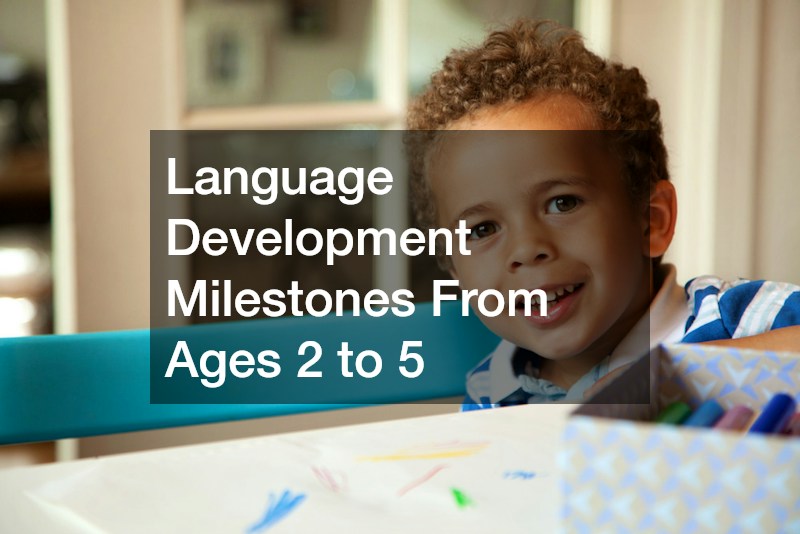
Between the ages of 2 and 5, children go from speaking in short phrases to telling stories, asking big questions, and holding real conversations. These years are a time of rapid growth, and every child develops at their own pace. Knowing the general milestones to watch for can help parents support their child’s progress at home and recognize when extra encouragement may be helpful. Many families also turn to early education for support. According to the NCES, half of all three- and four-year-olds are enrolled in school.
Combining Words at Age 2
Around age 2, many children begin putting two words together, such as “more milk” or “big truck.” Vocabulary grows quickly, and toddlers start naming familiar people, objects, and body parts. They can usually follow simple one-step directions and point to pictures when asked. Reading together, naming objects during daily routines, and responding to your child’s attempts to talk all help build early language skills. A quality local preschool can support this stage with songs, picture books, and plenty of conversation.
Building Sentences at Age 3
By age 3, children often speak in short sentences of three or more words and use words like “I,” “me,” and “you.” They start asking “what” and “where” questions and can talk about what they’re doing or what happened earlier. Familiar listeners can usually understand most of what they say. Pretend play, simple storytelling, and group activities give three-year-olds new chances to practice speaking and listening with others.
Telling Stories at Ages 4 and 5
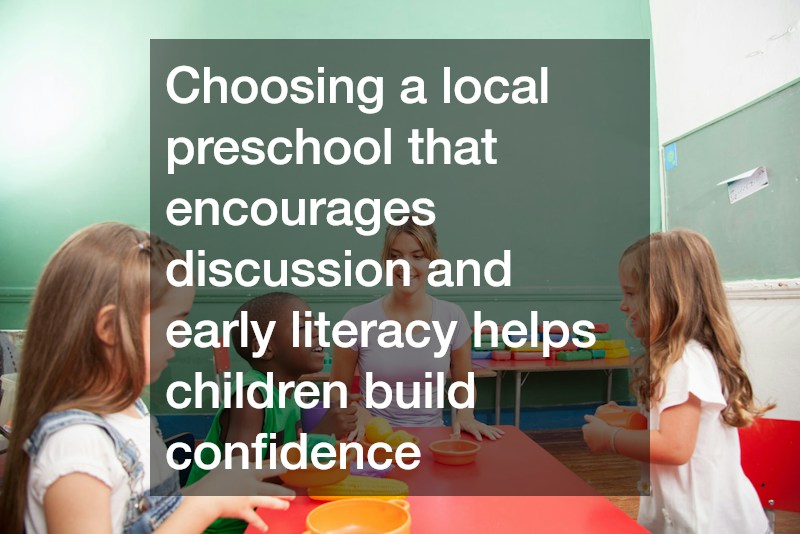
Four- and five-year-olds typically use longer, more detailed sentences and can retell simple stories in order. They ask lots of “why” questions, use descriptive words, and enjoy rhymes and wordplay. By age 5, most children can carry on conversations, follow multi-step directions, and speak clearly enough for strangers to understand. Choosing a local preschool that encourages discussion and early literacy helps children build confidence before kindergarten.
Language development looks different at every stage, so it helps to find a program that supports children from their toddler years through pre-kindergarten. Look for teachers who use hands-on activities, stories, songs, and daily conversation to help children grow into confident communicators. When choosing a local preschool, consider one that partners closely with families, and schedule a tour to see how language learning fits into the daily routine.
About the Author